Understanding MOQs in Pet Supplement Manufacturing: Why Minimum Batch Sizes Matter

Understanding MOQs in Pet Supplement Manufacturing: Why Minimum Batch Sizes Matter

When a company begins looking for a contract manufacturer, minimum order quantity—or MOQ—is often one of the first numbers discussed. For growing brands in particular, that number can have a significant impact on inventory planning and the initial investment required to bring a product to market.


It can also be easy to assume that manufacturing minimums exist primarily because producing a smaller batch isn’t profitable for the manufacturer.


Cost and production efficiency certainly play a role in determining MOQs, but there is another important consideration that is sometimes overlooked: product quality.


In supplement manufacturing, making a batch smaller isn’t always as simple as putting fewer ingredients into the same equipment. Manufacturing equipment is designed to operate within certain parameters, and producing below those parameters can affect how well product is processed.


Why Mixer Capacity Matters


Commercial mixing equipment is designed to move ingredients through a particular mixing pattern. The amount of material inside the mixer can affect how effectively that movement occurs.


When there isn’t enough material in a mixer, ingredients may not circulate through the equipment in the same way they would at an appropriate operating volume. Depending on the mixer and the product being manufactured, this can make achieving a consistent blend more difficult.


That becomes particularly important when manufacturing nutritional supplements.


A supplement formula may contain major ingredients included at relatively high percentages alongside vitamins, minerals, functional ingredients or other components included at much smaller amounts. Those ingredients need to be appropriately distributed throughout the finished batch.


Simply reducing every ingredient proportionally does not necessarily mean the manufacturing process can also be reduced indefinitely.


The Goal Isn’t Just a Mixed Product—It’s a Consistent One


For a supplement manufacturer, the question shouldn’t simply be:


“Can we physically make this amount?”


A better question is:


“Can we manufacture this amount using a process that is appropriate for the product?”


That distinction matters.


If an ingredient is intended to provide a particular amount per serving, proper distribution throughout the batch is an important part of producing a consistent finished product. Manufacturing parameters therefore need to consider the capabilities and operating ranges of the equipment being used.


This is one reason responsible manufacturers establish minimum batch sizes rather than continually reducing production quantities simply to accommodate smaller orders.


Other Factors That Influence Manufacturing MOQs


Product quality isn’t the only consideration. Minimum production quantities can also be influenced by several practical aspects of commercial manufacturing.


Raw-material suppliers may have their own minimum purchasing quantities. Production lines require setup and cleaning regardless of whether the resulting batch is relatively small or large. Quality-control procedures and testing may also represent fixed requirements for each production lot.


Packaging can introduce another set of minimums depending on the containers, labels and other components selected for the product.

These factors all contribute to the economics of commercial production. As batch sizes decrease, those fixed costs are distributed across fewer finished units, which can cause the cost per unit to increase considerably.


For a brand, that can ultimately affect something much more important than the manufacturer’s production cost: whether the finished product can be sold at a sustainable price.


A Lower MOQ Isn’t Automatically Better


When comparing contract manufacturers, it can be tempting to look for the company offering the smallest possible production run.


But MOQ should be evaluated alongside manufacturing capabilities, quality systems, scalability and the resulting cost of the finished product.


A very small initial production run may reduce the amount of inventory a company needs to purchase, but it isn’t necessarily the best manufacturing solution if it compromises production efficiency, dramatically increases unit cost or requires equipment to operate outside its ideal range.


The objective should be to find a production quantity that makes sense for both the product and the brand.


Minimum Batch Size Doesn’t Mean Maximum Capacity


There is another common misconception surrounding MOQs.


A manufacturer’s minimum order quantity tells you where its production range begins—not where it ends.


A manufacturer may be able to accommodate an emerging company placing its first commercial order while also having the equipment and production capacity necessary to support significantly larger volumes as that company grows.


That scalability can be an important consideration when selecting a long-term manufacturing partner.


Changing manufacturers because a brand has outgrown its original production partner can require transferring formulas, sourcing equivalent ingredients, coordinating packaging and documentation, and validating a new manufacturing process.


Choosing a manufacturer capable of supporting both current production requirements and future growth can help avoid some of those challenges.


Xtra Factors’ Approach to Minimum Production Quantities


At Xtra Factors, our standard minimum production quantity for many projects is 400 pounds.


This minimum isn’t intended to define the size of the companies we work with or the maximum volume we can produce. It establishes a practical starting point for manufacturing products using our commercial production equipment.


As our manufacturing capabilities continue to expand through additional equipment and automation, we are building production capacity designed to support customers across a broad range of commercial volumes.


For companies evaluating a contract manufacturer, MOQ is certainly an important question to ask—but it shouldn’t be the only one.


Ask why the minimum exists. Ask how the product will be manufactured. Ask how the manufacturer approaches blend consistency and quality. And ask whether the operation has the ability to support your company if today’s 400-pound order eventually becomes a much larger production run.


Ultimately, the right production quantity isn’t simply the smallest batch a manufacturer is willing to make.


It’s a batch size that allows your product to be manufactured appropriately, consistently and with room for your brand to grow.

September 29, 2026
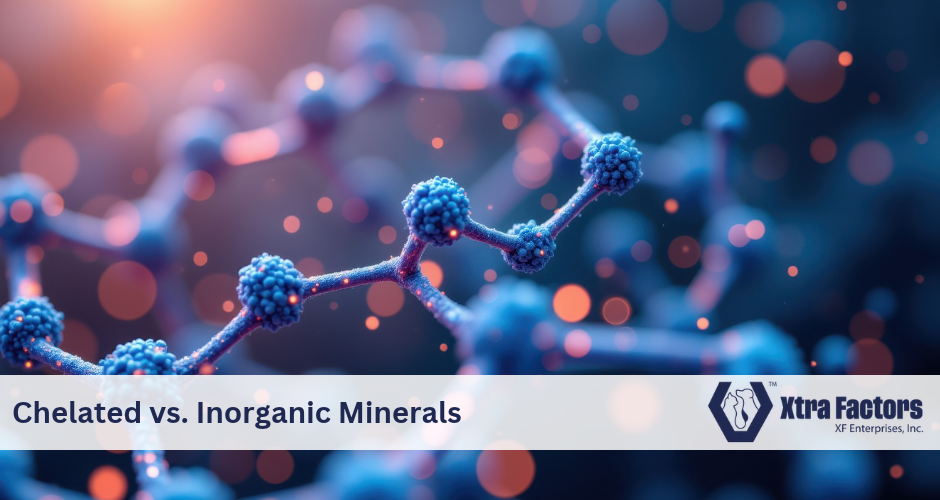
Minerals may make up a relatively small portion of a pet food or supplement formula, but they play an essential role in animal nutrition. Zinc, copper, manganese, iron, selenium, and other minerals support functions ranging from skin and coat health to metabolism, immune function, skeletal development, and antioxidant systems. But simply knowing how much of a mineral is present doesn't tell the whole story. The source of that mineral matters, too. If you've spent much time reading pet food or supplement labels, you may have noticed ingredients such as zinc sulfate, copper sulfate, zinc proteinate, or manganese amino acid complex. These ingredients can supply the same essential minerals, but they aren't necessarily identical in how they behave within a formula or the digestive tract. One of the most common distinctions is between inorganic minerals and chelated minerals . So, what's the difference—and does one automatically make a better pet product? What Are Inorganic Minerals? Inorganic mineral sources are minerals bound to inorganic compounds such as sulfates, oxides, chlorides, or carbonates. Common examples used in animal nutrition include: Zinc sulfate Copper sulfate Manganese sulfate Ferrous sulfate Zinc oxide Manganese oxide Once consumed, these compounds dissociate during digestion, making mineral ions available for absorption. Inorganic minerals have been used successfully in animal nutrition for decades. They are generally well characterized, readily available, and economical, which makes them practical ingredients for many pet foods and supplements. However, once a mineral separates from its original compound within the digestive tract, it can potentially interact with other dietary components. Depending on the mineral and the rest of the diet, these interactions may influence how much of that mineral ultimately becomes available to the animal. That's one reason formulators sometimes consider alternative mineral sources. What Are Chelated Minerals? Chelated minerals are minerals that have been bound to an organic molecule, often an amino acid, peptide, or protein component. Depending on the specific product and manufacturing process, you may encounter ingredient names such as: Zinc proteinate Copper proteinate Manganese proteinate Zinc amino acid complex Copper amino acid complex Mineral glycinates The organic component essentially acts as a carrier for the mineral. The idea behind chelation is that keeping the mineral associated with an organic molecule may help protect it from certain interactions within the digestive tract and potentially influence how efficiently it can be utilized. However, "chelated" is a broad category . Different products can use different ligands, manufacturing processes, mineral concentrations, and chemical structures. Two ingredients that are both marketed as chelated minerals aren't necessarily nutritionally identical. Are Chelated Minerals More Bioavailable? This is where the discussion gets more complicated. Bioavailability describes how much of an ingested nutrient is ultimately available for the body to absorb and use. Mineral source can influence bioavailability, and some organic or chelated mineral sources have demonstrated advantages over certain inorganic sources under particular conditions. That doesn't mean every chelated mineral is automatically more bioavailable than every inorganic mineral. Mineral utilization can be affected by many factors, including: The specific mineral The chemical form of the mineral The quality and stability of the chelate Other minerals present in the formula Fiber and other dietary components The animal's life stage and nutritional status Total mineral concentration Digestive conditions The overall composition of the diet This is an important distinction when evaluating pet nutrition products. Seeing a chelated mineral on an ingredient list can provide information about the source a manufacturer selected, but the word "chelated" alone doesn't tell you how well the entire product has been formulated. Why Are Inorganic Minerals Still Used? If chelated minerals can offer potential advantages, why not use them exclusively? Because inorganic mineral sources can still be highly effective. For many applications, inorganic minerals provide a reliable and well-established way to meet an animal's nutritional requirements. They are also typically more economical than specialty chelated mineral ingredients. Cost matters in formulation—not simply because manufacturers want to produce products inexpensively, but because every ingredient decision contributes to the final cost of the product. Using a more expensive ingredient only makes sense when it provides a meaningful benefit for the intended formulation. Good formulation isn't about choosing the most expensive version of every ingredient. It's about selecting ingredients that accomplish the nutritional and functional goals of the finished product. Why Might a Formulator Choose Chelated Minerals? There are several reasons a formulator may consider chelated or organic mineral sources. One is the potential to improve mineral availability under certain dietary conditions. Minerals can interact with one another and with other components of the diet, potentially reducing absorption. Some chelated forms may be less susceptible to particular antagonistic interactions. Chelated minerals can also be useful when formulators are trying to provide minerals efficiently without simply increasing the total amount added to a product. But the decision should be based on the entire formulation , not one ingredient in isolation. For example, a formulator may consider existing mineral contributions from food ingredients, interactions among supplemental minerals, the intended serving size, processing conditions, product format, nutritional targets, and cost before selecting a mineral source. Sometimes the Best Answer Is Both Pet nutrition doesn't always require choosing between 100% inorganic or 100% chelated minerals. A formulation may use multiple mineral sources . An inorganic mineral might provide a reliable and economical foundation, while an organic or chelated source provides another form of the same nutrient. This allows formulators to balance nutritional goals, ingredient functionality, cost, and the characteristics of the finished product. This approach also illustrates an important principle of formulation: Ingredients should be evaluated as part of a complete nutritional system rather than individually. A mineral source that works extremely well in one formulation may not be the best choice for another. Mineral Source Isn't the Same as Mineral Concentration Another common source of confusion is the difference between the amount of a mineral ingredient added and the amount of elemental mineral that ingredient actually supplies. For example, adding 100 milligrams of a zinc-containing ingredient does not necessarily provide 100 milligrams of zinc. Mineral ingredients contain different percentages of elemental mineral depending on their chemical composition. A formulator must account for the mineral concentration of the specific ingredient when determining how much should be added to a formula. The same principle applies to chelated mineral ingredients. The carrier or ligand makes up part of the ingredient's total weight, so the amount of elemental mineral must still be calculated from the ingredient's specifications. This is one reason formulation requires more than simply assembling a list of desirable ingredients. More Isn't Necessarily Better Minerals are essential nutrients, but that doesn't mean adding more automatically creates a better product. Some minerals interact with one another during digestion and metabolism. Excessive amounts of one mineral can potentially influence the utilization of another, and certain trace minerals have relatively narrow ranges between nutritional adequacy and excessive intake. A well-designed pet supplement therefore needs to consider not only which mineral sources are used , but also how much of each mineral the animal ultimately receives. This becomes especially important when a supplement is intended to be fed alongside a complete and balanced diet that already contains supplemental vitamins and minerals. What Should Pet Product Brands Consider? When developing a mineral-containing pet supplement or nutritional product, ingredient selection should start with the purpose of the formula. Instead of simply asking, "Should we use chelated minerals?" , better questions include: What mineral levels does the finished product need to provide? What other ingredients contribute those minerals naturally? Are there potential nutrient interactions within the formula? What serving size will consumers actually feed? How will the product be processed? And does a specialty mineral source provide a meaningful advantage for this particular application? Those questions lead to better formulation decisions than selecting an ingredient simply because it sounds more premium on a label. The Ingredient Name Is Only Part of the Story Chelated minerals can be valuable tools in pet nutrition, but inorganic minerals aren't inherently inferior. Both can have an appropriate place in a well-designed formula. What matters is why a particular ingredient was selected, how much usable mineral it contributes, how it interacts with the rest of the formulation, and whether the finished product accomplishes its nutritional goals. At Xtra Factors, ingredient selection is considered as part of the complete product—not simply as a collection of individual ingredients. From mineral sources and inclusion levels to processing, blending, and finished-product specifications, thoughtful formulation and manufacturing decisions help turn an ingredient list into a consistent, high-quality product. Whether you're developing a new pet supplement, refining an existing formula, or looking for a manufacturing partner to bring your product to market, understanding the ingredients behind the label is an important part of creating products you can confidently stand behind.
September 29, 2026
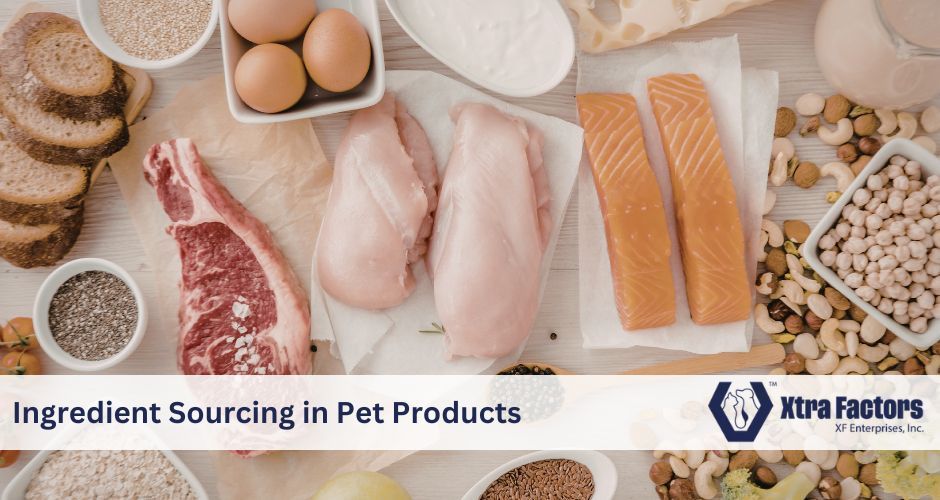
Ingredient sourcing is one of the most important—yet often underappreciated—factors in the pet product industry. Whether it’s supplements, treats, functional foods, or topical products, the quality of the final product is directly tied to the quality of the ingredients used to make it. As pet owners become more informed and selective, expectations have shifted. It’s no longer enough for a product to simply meet basic standards—it needs to be consistent, safe, effective, and trustworthy. That level of quality doesn’t start in the formulation room or on the production line. It starts at the source. Understanding ingredient sourcing requires looking at the broader industry, the structure of a reliable supply chain, and how companies like Xtra Factors apply these principles to consistently deliver high-quality pet products. Ingredient Sourcing in the Modern Pet Industry The pet industry has experienced rapid growth in recent years, expanding far beyond traditional kibble and into a wide range of specialized products. With that growth has come increased complexity in ingredient sourcing. Many ingredients used across pet products are sourced globally. Fish oils may come from South America, botanical extracts from Asia, and proteins from multiple regions depending on availability and cost. While global sourcing allows access to a wide variety of materials, it also introduces variability that can impact product quality. Two ingredients with the same name can differ significantly depending on their origin, processing method, and level of refinement. For example, oils can vary in oxidation levels, plant-based ingredients can differ in active compound concentration, and proteins can vary in digestibility and flavor. These differences are not always visible on a label, but they directly affect performance. This creates several challenges for manufacturers: Inconsistent quality from batch to batch Risk of contaminants such as heavy metals, pesticides, or microbial exposure Variability in effectiveness and bioavailability Changes in taste, smell, or texture that affect palatability At the same time, competitive pricing pressures can push companies toward lower-cost sourcing decisions. While these ingredients may meet minimum specifications, they often lack the consistency and reliability needed to produce truly high-quality products. As a result, ingredient sourcing has become a defining factor in brand trust. Consumers are increasingly looking for transparency, consistency, and accountability in the products they choose for their pets. Building a Reliable and High-Quality Supply Chain A strong supply chain is what transforms raw ingredients into dependable, finished products. It’s not just about finding suppliers—it’s about building a system that prioritizes quality, traceability, and consistency at every step. The foundation of any reliable supply chain is supplier qualification. This involves working with partners who have proven standards, consistent production practices, and a willingness to provide full transparency into their processes. Documentation such as certificates of analysis (COAs) is important, but it must be supported by verification through third-party testing and, when possible, supplier audits. Traceability is another critical component. Knowing where an ingredient originates—and how it moves through processing, storage, and transportation—provides a level of control that is essential for maintaining quality. When issues arise, traceability allows for quick identification and resolution, minimizing risk to both the product and the end consumer. Processing and handling also play a major role in ingredient integrity. Exposure to heat, light, oxygen, and moisture can all degrade sensitive compounds. A well-managed supply chain accounts for these factors, ensuring that ingredients maintain their intended functionality from origin to final use. Consistency is the ultimate goal. Achieving it requires: Clearly defined ingredient specifications Routine testing for purity, potency, and safety Strong, long-term supplier relationships Standardized handling and storage protocols When these elements are aligned, manufacturers can produce products that perform the same way every time—something that is critical for both efficacy and consumer confidence. Why Sourcing Impacts More Than Just Quality Ingredient sourcing doesn’t just affect safety and nutrient content—it also influences how a product performs in real-world use. Palatability, for example, is directly tied to ingredient quality. In pet foods and treats, the source and quality of proteins and fats significantly impact taste and aroma. In supplements and functional products, ingredient purity and processing can influence texture, smell, and overall acceptance—especially in more selective animals like cats. Sourcing also affects formulation efficiency. Higher-quality, more consistent ingredients often allow for better bioavailability, meaning pets can absorb and utilize nutrients more effectively. This can reduce the need for excessive inclusion rates or unnecessary fillers, resulting in cleaner, more purposeful formulations. In short, better sourcing leads to better-performing products—not just on paper, but in everyday use. The Xtra Factors Approach to Ingredient Sourcing At Xtra Factors, ingredient sourcing is treated as a core part of product development across all pet product categories—not just supplements. Every product begins with a simple principle: the final result can only be as good as the ingredients behind it. Instead of chasing trends or prioritizing cost alone, Xtra Factors focuses on functional, high-quality ingredients that deliver consistent results. Each ingredient is evaluated based on its origin, processing method, and ability to contribute meaningful value to the final product. Supplier relationships are carefully selected and maintained to ensure long-term reliability. By working with trusted partners and continuously verifying quality through testing and documentation, Xtra Factors minimizes variability and maintains strict control over ingredient integrity. This approach also supports better formulation and production outcomes. With higher-quality inputs, products are more consistent, more effective, and more palatable—whether they are supplements, treats, or other functional pet products. Most importantly, this commitment to sourcing creates a level of trust. Customers can feel confident that every product is built on a foundation of quality, transparency, and purpose. Final Thoughts Ingredient sourcing is not just one step in the manufacturing process—it is the starting point that defines everything that follows. In an industry where variability is common, a disciplined and thoughtful approach to sourcing is what separates dependable products from inconsistent ones. As the pet industry continues to evolve, the importance of transparency, quality, and supply chain integrity will only grow. Brands that invest in these areas will be better equipped to meet the expectations of today’s pet owners. At Xtra Factors, that investment begins at the source—and carries through every stage of product development, ensuring that quality is never left to chance.
May 5, 2026
Ingredient sourcing is one of the most important—yet often underappreciated—factors in the pet product industry. Whether it’s supplements, treats, functional foods, or topical products, the quality of the final product is directly tied to the quality of the ingredients used to make it. As pet owners become more informed and selective, expectations have shifted. It’s no longer enough for a product to simply meet basic standards—it needs to be consistent, safe, effective, and trustworthy. That level of quality doesn’t start in the formulation room or on the production line. It starts at the source. Understanding ingredient sourcing requires looking at the broader industry, the structure of a reliable supply chain, and how companies like Xtra Factors apply these principles to consistently deliver high-quality pet products. Ingredient Sourcing in the Modern Pet Industry The pet industry has experienced rapid growth in recent years, expanding far beyond traditional kibble and into a wide range of specialized products. With that growth has come increased complexity in ingredient sourcing. Many ingredients used across pet products are sourced globally. Fish oils may come from South America, botanical extracts from Asia, and proteins from multiple regions depending on availability and cost. While global sourcing allows access to a wide variety of materials, it also introduces variability that can impact product quality. Two ingredients with the same name can differ significantly depending on their origin, processing method, and level of refinement. For example, oils can vary in oxidation levels, plant-based ingredients can differ in active compound concentration, and proteins can vary in digestibility and flavor. These differences are not always visible on a label, but they directly affect performance. This creates several challenges for manufacturers: Inconsistent quality from batch to batch Risk of contaminants such as heavy metals, pesticides, or microbial exposure Variability in effectiveness and bioavailability Changes in taste, smell, or texture that affect palatability At the same time, competitive pricing pressures can push companies toward lower-cost sourcing decisions. While these ingredients may meet minimum specifications, they often lack the consistency and reliability needed to produce truly high-quality products. As a result, ingredient sourcing has become a defining factor in brand trust. Consumers are increasingly looking for transparency, consistency, and accountability in the products they choose for their pets. Building a Reliable and High-Quality Supply Chain A strong supply chain is what transforms raw ingredients into dependable, finished products. It’s not just about finding suppliers—it’s about building a system that prioritizes quality, traceability, and consistency at every step. The foundation of any reliable supply chain is supplier qualification. This involves working with partners who have proven standards, consistent production practices, and a willingness to provide full transparency into their processes. Documentation such as certificates of analysis (COAs) is important, but it must be supported by verification through third-party testing and, when possible, supplier audits. Traceability is another critical component. Knowing where an ingredient originates—and how it moves through processing, storage, and transportation—provides a level of control that is essential for maintaining quality. When issues arise, traceability allows for quick identification and resolution, minimizing risk to both the product and the end consumer. Processing and handling also play a major role in ingredient integrity. Exposure to heat, light, oxygen, and moisture can all degrade sensitive compounds. A well-managed supply chain accounts for these factors, ensuring that ingredients maintain their intended functionality from origin to final use. Consistency is the ultimate goal. Achieving it requires: Clearly defined ingredient specifications Routine testing for purity, potency, and safety Strong, long-term supplier relationships Standardized handling and storage protocols When these elements are aligned, manufacturers can produce products that perform the same way every time—something that is critical for both efficacy and consumer confidence. Why Sourcing Impacts More Than Just Quality Ingredient sourcing doesn’t just affect safety and nutrient content—it also influences how a product performs in real-world use. Palatability, for example, is directly tied to ingredient quality. In pet foods and treats, the source and quality of proteins and fats significantly impact taste and aroma. In supplements and functional products, ingredient purity and processing can influence texture, smell, and overall acceptance—especially in more selective animals like cats. Sourcing also affects formulation efficiency. Higher-quality, more consistent ingredients often allow for better bioavailability, meaning pets can absorb and utilize nutrients more effectively. This can reduce the need for excessive inclusion rates or unnecessary fillers, resulting in cleaner, more purposeful formulations. In short, better sourcing leads to better-performing products—not just on paper, but in everyday use. The Xtra Factors Approach to Ingredient Sourcing At Xtra Factors, ingredient sourcing is treated as a core part of product development across all pet product categories—not just supplements. Every product begins with a simple principle: the final result can only be as good as the ingredients behind it. Instead of chasing trends or prioritizing cost alone, Xtra Factors focuses on functional, high-quality ingredients that deliver consistent results. Each ingredient is evaluated based on its origin, processing method, and ability to contribute meaningful value to the final product. Supplier relationships are carefully selected and maintained to ensure long-term reliability. By working with trusted partners and continuously verifying quality through testing and documentation, Xtra Factors minimizes variability and maintains strict control over ingredient integrity. This approach also supports better formulation and production outcomes. With higher-quality inputs, products are more consistent, more effective, and more palatable—whether they are supplements, treats, or other functional pet products. Most importantly, this commitment to sourcing creates a level of trust. Customers can feel confident that every product is built on a foundation of quality, transparency, and purpose. Final Thoughts Ingredient sourcing is not just one step in the manufacturing process—it is the starting point that defines everything that follows. In an industry where variability is common, a disciplined and thoughtful approach to sourcing is what separates dependable products from inconsistent ones. As the pet industry continues to evolve, the importance of transparency, quality, and supply chain integrity will only grow. Brands that invest in these areas will be better equipped to meet the expectations of today’s pet owners. At Xtra Factors, that investment begins at the source—and carries through every stage of product development, ensuring that quality is never left to chance.